

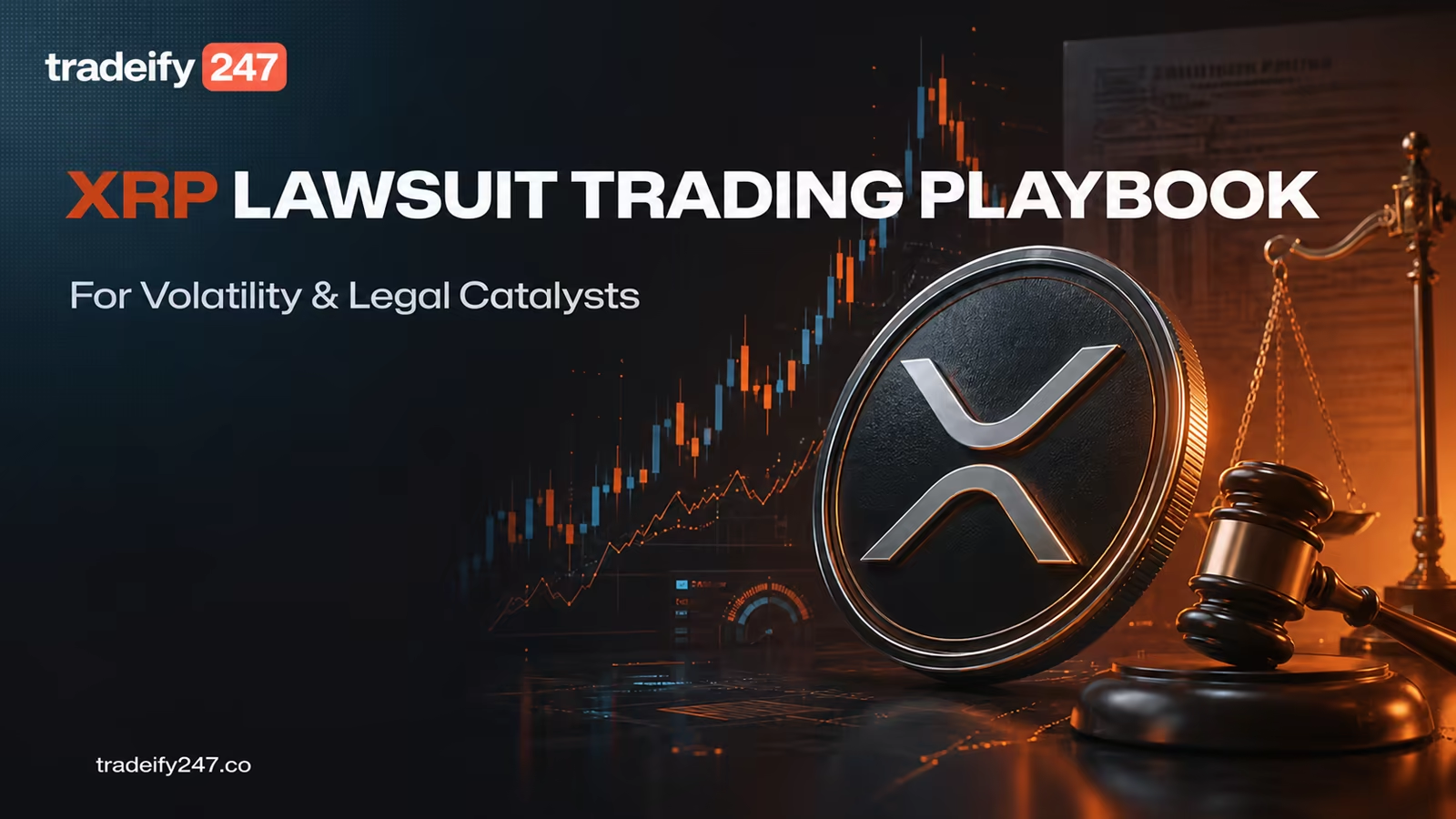
The XRP Lawsuit Trading Playbook: Volatility Around Legal Catalysts


.svg)

The XRP lawsuit was a multi-year legal drama that created tradable volatility around court rulings and procedural events. Tradeify247 traders who understood legal catalyst patterns — scheduled vs unscheduled events, "buy the rumor sell the news" reversals, post-resolution orderly price action — could navigate the volatility without breaking firm rules. The framework applies to any token facing regulatory uncertainty.
The XRP Lawsuit Playbook: Trading Volatility Around Legal Catalysts
The SEC vs Ripple lawsuit was one of the longest-running legal dramas in crypto history. From filing in December 2020 to the final settlement in 2025, XRP experienced multiple volatility spikes tied to legal rulings, court filings, and procedural events. Tradeify247 traders who traded through this period saw how legal catalysts affect crypto prices differently than fundamental or technical catalysts.
The XRP case is a useful study for crypto prop traders because legal events create structured volatility patterns that can be traded systematically. Tradeify247 traders who understand the patterns can apply the framework to other tokens facing regulatory or legal uncertainty — there are always several at any given time in crypto.
How Legal Catalysts Move Price
Legal catalysts affect crypto prices in two distinct ways: scheduled events (court rulings, hearings) create predictable volatility windows, and unscheduled events (filings, settlements) create sudden price moves. XRP experienced both repeatedly over the lawsuit's lifespan, and each type of event produced different trading opportunities.
Scheduled events allow traders to position ahead of time with defined risk. Unscheduled events require faster reaction and tighter risk management. Tradeify247 traders navigating legal catalysts need different strategies for each type, and the firm's HFT restrictions require waiting for the dust to settle rather than trying to scalp the initial spike.
The Patterns Around Court Rulings
Major court rulings on XRP consistently produced 10-30% intraday moves, with the direction depending on whether the ruling was favorable or unfavorable to Ripple. The size of the move correlated with how unexpected the ruling was — surprise rulings produced larger moves than widely-anticipated ones.
Tradeify247 traders who positioned ahead of court rulings needed to size positions carefully because the volatility around legal events can spike beyond normal expectations. The 3% equity floor rule provides a buffer, but traders still needed to define stops before the event and stick to them regardless of how the ruling played out.
How the Final Resolution Played Out
The 2025 settlement between the SEC and Ripple ended the lawsuit with terms that were generally favorable to Ripple. The market had largely priced in a favorable resolution by the time it was announced, but the formal settlement still produced a measurable price reaction. Tradeify247 traders who held through the resolution experienced the post-resolution volatility without the protection of running positions into the event.
The post-resolution period showed a classic "buy the rumor, sell the news" pattern. XRP rallied into the resolution on anticipation, then sold off as traders took profits. Tradeify247 traders who recognized the pattern in advance could have positioned for the post-resolution move rather than holding through the volatility spike.
Lessons for Trading Regulatory Events
Legal and regulatory events create tradable volatility, but the trading requires more discipline than typical setups. The directional bias isn't always clear, the volatility can spike beyond normal ranges, and the post-event price action often reverses the initial move. Tradeify247 traders need to define their approach before the event and execute it cleanly.
The XRP case shows that legal catalysts can sustain price action over years, not just days. Traders who maintained consistent exposure through the multi-year legal saga captured more of the move than traders who tried to time individual rulings. Tradeify247's account scaling rewards this kind of patient positioning.
Risk Management Around Legal Catalysts
Legal events produce higher volatility than typical setups, which means risk management matters more than usual. Tradeify247 traders should reduce position size when approaching known legal events and define maximum loss tolerance before entering. The firm's risk rules provide a framework, but traders need to apply additional discipline around specific events.
Stop placement around legal events is tricky because volatility spikes can trigger stops before the actual price discovery happens. Tradeify247 traders should consider using mental stops with manual execution, or wider algorithmic stops that account for the expected volatility range. Tight stops around legal events often get triggered by noise rather than meaningful reversals.

Trade Crypto Without Limits
Tradeify is built for crypto traders who want clarity, consistency, and speed — not surprises.


Position Sizing Into Legal Events
Tradeify247 traders approaching legal events should reduce standard position size by 30-50% to account for the higher volatility. The reduced sizing keeps individual trades within the firm's daily drawdown limits even when volatility spikes beyond normal ranges. Position sizing is the most controllable variable around legal events; entry timing and direction are harder to predict.
The reduced sizing also has psychological benefits. Smaller positions are easier to manage emotionally when volatility spikes, and the reduced stress helps traders execute their planned exits without panic decisions. Tradeify247 traders who approach legal events with appropriately sized positions perform better than traders who over-leverage into high-volatility setups.
Trading the Post-Resolution Period
The post-resolution period is often more tradeable than the resolution itself. Once the legal uncertainty is removed, the price action becomes more orderly and responsive to typical technical and fundamental signals. Tradeify247 traders who wait for the post-resolution period to develop can trade cleaner setups without the legal-event volatility distortion.
The post-resolution period for XRP lasted several months as the market digested the implications of the settlement. Tradeify247 traders who recognized this period could have traded the range that developed as the market established a new equilibrium. The setup was more straightforward than the legal-event volatility itself.
Applying the Framework to Other Tokens
The XRP lawsuit playbook applies to any token facing legal or regulatory uncertainty. There are always several tokens in this position at any given time in crypto — tokens under SEC investigation, tokens facing CFTC actions, tokens dealing with international regulatory issues. Tradeify247 traders can use the XRP playbook as a template for navigating any of these situations.
The framework includes: identify scheduled legal events, define position sizing rules, plan entries and exits before the event, and prepare for both favorable and unfavorable outcomes. The framework isn't a winning strategy by itself, but it provides structure for trading situations that otherwise feel chaotic.
The "Buy the Rumor, Sell the News" Pattern
The "buy the rumor, sell the news" pattern appeared multiple times during the XRP lawsuit. Traders who anticipated favorable rulings positioned ahead of time, and the formal ruling often produced a selloff as positions were unwound. The pattern is common around all scheduled events in financial markets, but it was particularly visible during the XRP case.
Tradeify247 traders who recognized the pattern could have positioned for the post-event move rather than holding through the volatility. The pattern doesn't always work — sometimes the news is sufficiently surprising to produce a sustained move in the news direction — but the probability favors the reversal pattern in cases where expectations are widely held.
What XRP Traders Got Right and Wrong
XRP traders who held through the lawsuit with appropriate position sizing generally did well over the multi-year period. The resolution was favorable enough that patient holders captured meaningful upside. Traders who tried to time individual rulings often underperformed because the volatility around each ruling was too high to trade consistently.
Tradeify247 traders who approach similar situations can learn from the XRP case: define a thesis, size positions to survive volatility, and let the situation develop rather than trying to trade every twist. The patience required is hard to maintain, but it's how consistent returns get generated in legal-catalyst situations.
The conversation happens live
Blog comments are too slow for crypto. Join 12,000+ traders in our Discord to discuss this article, share charts, and debate the market in real-time.
Join Discord
Final Takeaways for Tradeify247 Traders
The XRP lawsuit is a complete case study in how to trade legal catalysts in crypto. Tradeify247 traders who understand the framework can apply it to current and future regulatory situations. The key elements: identify the catalyst type, size positions appropriately, define exits before the event, and let the situation develop rather than trying to time every move.
The most important lesson is patience. Legal situations take time to resolve, and the volatility around them creates noise that punishes impatient traders. Tradeify247 traders who maintain consistent exposure with appropriate sizing tend to do better than traders who try to trade every ruling. The multi-year timeline of the XRP case is unusual, but the patience principle applies to shorter situations as well.
For traders running strategies on Tradeify247 today, the XRP playbook is a useful reference for any token in the firm's pair menu that faces regulatory or legal uncertainty. The framework provides structure for situations that otherwise feel chaotic, and structure is what generates consistent returns in volatile environments.

Keep Reading
See all
Are Tokenized Stocks Safe and What Risks to Check First
Crypto Prop Firm USA Rules and What Traders Can Access