

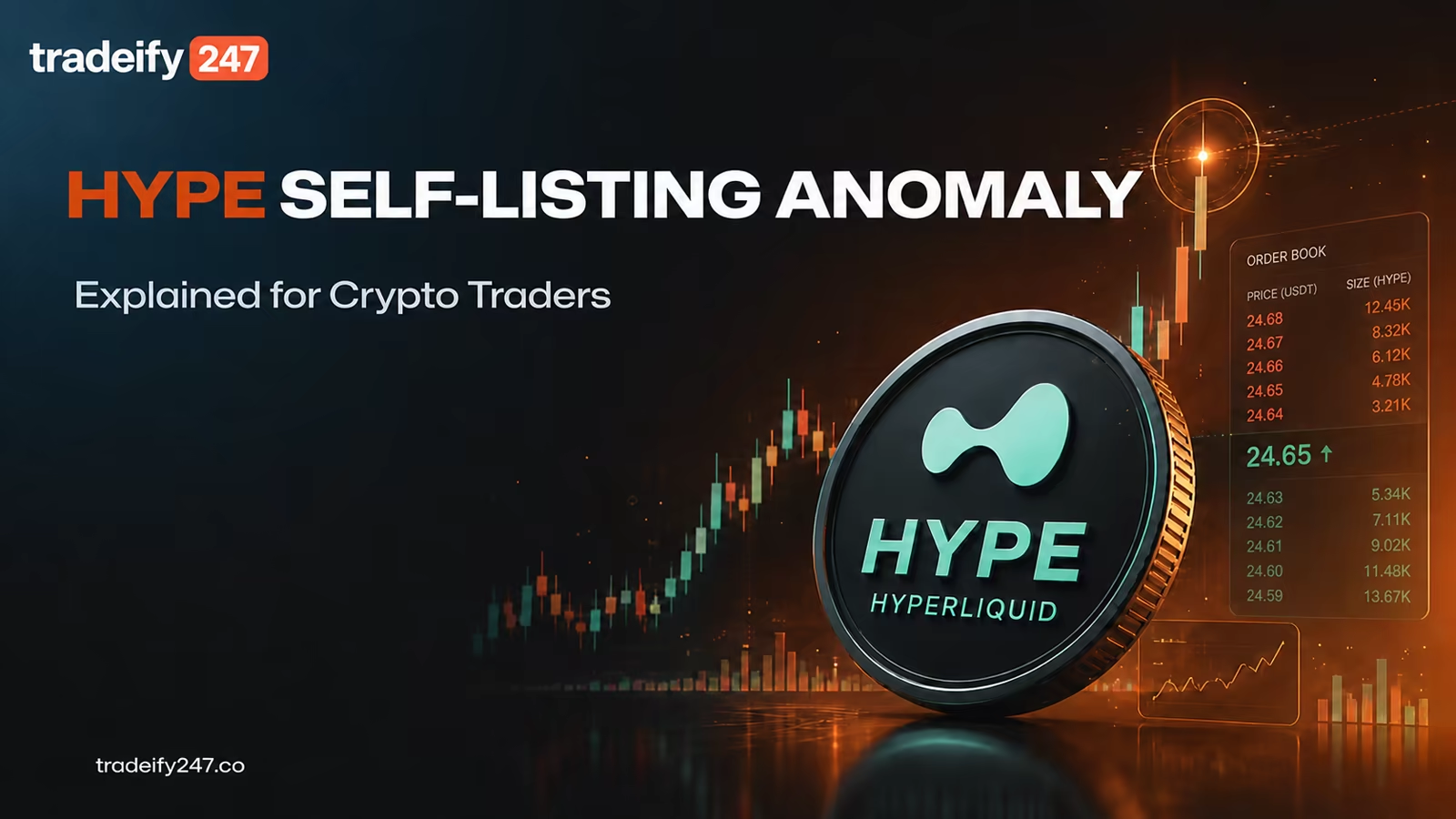
The HYPE Self-Listing Anomaly: What Crypto Prop Traders Should Understand


.svg)

The HYPE self-listing was structurally different from typical token launches. Instead of a CEX-first listing, HYPE launched directly on Hyperliquid with self-custody and deep native liquidity. The token pumped because of reflexive demand from platform adoption rather than the typical CEX-driven FOMO. Tradeify247 traders can apply the lessons to other reflexive tokens with utility-driven demand.
The HYPE Self-Listing Anomaly: What Crypto Prop Traders Should Understand
The HYPE token's listing in late 2024 was unusual: instead of being listed on a centralized exchange first and trading there, HYPE launched directly on its native Hyperliquid platform with self-custody as the default. The result was a token that pumped without the typical launch dynamics crypto traders expect, and the post-launch behavior created a structural anomaly worth understanding for anyone trading altcoins on Tradeify247.
The HYPE self-listing case is a useful study in how launch structure affects price behavior. The token's performance during the first 90 days broke several patterns that traders typically use to evaluate new listings. Tradeify247 traders who recognize the structural differences can apply the lessons to other tokens with non-standard launches.
What Made the HYPE Listing Different
Most token launches follow a recognizable pattern: pre-market trading on DEXs or OTC desks, listing on a major centralized exchange, then price discovery as liquidity migrates. HYPE skipped most of that process. The token traded on Hyperliquid's order book from day one with deep liquidity, and there was no centralized exchange listing that initially drove volume.
The absence of a CEX listing meant no CEX-driven volatility spike at launch. Instead, the price discovery happened entirely on Hyperliquid's order book. The result was smoother price action in the first 24 hours than typical token launches, which created unusual entry conditions for traders who expected the standard launch volatility pattern.
Why the Pump Happened Anyway
Despite the smooth launch, HYPE pumped significantly in the weeks after listing. The driver wasn't the typical CEX-driven retail FOMO; it was the token's utility within the Hyperliquid ecosystem and the reflexive trading dynamics that utility created. As more traders used Hyperliquid for perpetual futures, demand for HYPE increased because the token had fee and governance utility.
The reflexive structure — more platform use drives more token demand — created a self-reinforcing cycle that traders on Tradeify247 can recognize in other tokens with strong product-market fit. The pattern matters because the pump wasn't driven by speculation alone; it was driven by actual platform adoption.
Lessons for Altcoin Selection on Tradeify247
Tradeify247 traders running altcoin strategies should consider whether a token has utility-driven demand rather than purely speculative demand. Tokens tied to working products with real users tend to have more sustained price action than tokens that pump on listing announcements and then fade.
The HYPE case shows that tokens with strong product-market fit can experience sustained upside even without the typical launch dynamics. Tradeify247 traders evaluating altcoin trades should research the underlying project's traction, not just the listing mechanics.
How to Trade Reflexive Tokens
Reflexive tokens like HYPE create different trade patterns than typical altcoins. The momentum tends to be sustained because the underlying demand is ongoing. Pullbacks often find support near previous consolidation zones. Tradeify247 traders can use these patterns to enter on retracements rather than chase breakouts.
The risk in reflexive tokens is that the reflexive loop reverses. If platform usage declines, the demand for the token declines, which can lead to sharp drawdowns. Tradeify247 traders holding reflexive tokens need to monitor the underlying platform metrics, not just price action.
Why Self-Custody Changed the Game
The self-custody aspect of HYPE's listing meant traders had full control over their tokens from day one. There was no centralized exchange holding tokens and potentially restricting withdrawals. The structural difference reduced some of the manipulation risk that affects typical token launches.
Tradeify247 traders running altcoin strategies benefit from understanding the custody structure of any token they trade. Tokens with self-custody default and clear on-chain transparency behave differently than tokens concentrated on centralized exchanges with limited transparency.

Trade Crypto Without Limits
Tradeify is built for crypto traders who want clarity, consistency, and speed — not surprises.


Comparing HYPE to Typical Token Launches
Typical token launches see 50-200% volatility in the first 48 hours as liquidity migrates and market makers establish positions. HYPE saw much lower volatility because the liquidity was already established on Hyperliquid from day one. The reduced launch volatility created a more orderly price discovery process, which actually benefited longer-term traders.
For Tradeify247 traders evaluating new altcoin launches, the comparison matters. Tokens with self-listing structures tend to have less launch volatility and more sustained price action. Tokens with typical CEX-first launches tend to have higher launch volatility and more speculative behavior. The structural difference should inform strategy selection.
The Role of Perpetual Futures in the HYPE Story
Hyperliquid's core product is perpetual futures, and HYPE's value is tied to the platform's success. As Hyperliquid gained market share in the perpetual futures space, HYPE's demand increased because traders wanted exposure to the platform's growth. The reflexive loop between platform adoption and token demand was unusually direct compared to most token-platform relationships.
Tradeify247 traders running altcoin strategies should understand that some tokens have direct exposure to platform metrics. HYPE is the clearest example in recent memory, but other tokens with similar structures — where platform success directly drives token demand — exist. Identifying these reflexive structures early can lead to sustained profitable trades.
How to Identify Future Reflexive Tokens
The structural pattern for reflexive tokens is clear: a working platform with real users, a token with utility within that platform, and a self-reinforcing loop between platform success and token demand. Tradeify247 traders can evaluate altcoins against this pattern and identify tokens likely to experience sustained upside.
The pattern isn't a guarantee — many tokens with utility-driven models have failed. But the structural clarity of the demand loop matters. Tradeify247 traders who evaluate the underlying mechanics rather than just price action can identify tokens with stronger fundamentals.
What Happens When the Reflexive Loop Breaks
Reflexive loops break when platform usage declines or when the market sentiment shifts away from the platform's growth narrative. HYPE has experienced some pullbacks during periods of broader crypto weakness, though the structural demand has remained intact. Tradeify247 traders holding reflexive tokens need to monitor for signs of loop breakage: declining platform volume, declining token utility, or a shift in market narrative.
The signs are usually visible in platform metrics before they show in price action. Tradeify247 traders with access to underlying metrics can exit before the price decline accelerates. Without those metrics, the price action itself is the signal — and by then, the move is already underway.
Self-Listing as a Trend Going Forward
The HYPE success may inspire other projects to adopt self-listing structures. Tradeify247 traders should expect to see more tokens launching directly on their native platforms with self-custody defaults. The trend changes how new tokens should be evaluated — less focus on the CEX listing event and more focus on the underlying platform's traction.
For prop traders, the trend creates both opportunities and risks. Opportunities exist in identifying strong reflexive tokens early. Risks exist in assuming past reflexive token performance predicts future performance. Each token needs its own evaluation based on its specific platform dynamics.
The conversation happens live
Blog comments are too slow for crypto. Join 12,000+ traders in our Discord to discuss this article, share charts, and debate the market in real-time.
Join Discord
What Tradeify247 Traders Should Take Away
The HYPE self-listing is a useful case study in how launch structure affects price behavior and how traders should evaluate tokens that don't follow the standard launch pattern. Tradeify247 traders running altcoin strategies benefit from understanding the structural differences between HYPE-style launches and typical CEX-first launches.
The key takeaway: tokens with strong product-market fit and reflexive demand structures can experience sustained upside regardless of launch mechanics. The pump isn't driven by listing event speculation; it's driven by ongoing platform adoption. Tradeify247 traders who recognize this dynamic can position accordingly.
For practical application, monitor platform metrics alongside price action when trading reflexive tokens. Volume, user growth, and protocol revenue all matter. The price follows the fundamentals in reflexive token structures, and Tradeify247 traders who understand the connection can capture more of the move.

Keep Reading
See all
Are Tokenized Stocks Safe and What Risks to Check First
Crypto Prop Firm USA Rules and What Traders Can Access