



Crypto vs Forex Prop Trading: What Actually Differs in Speed and Execution


.svg)

Crypto and forex prop trading share mechanical similarity but differ in volatility speed, session structure, news behavior, and leverage. Tradeify247 traders who run both asset classes within the same DxTrade environment need to recalibrate position sizing, stop placement, and strategy selection for each asset class — even though the firm's risk rules apply uniformly across both.
Crypto vs Forex Prop Trading: What Actually Differs in Speed and Execution
Crypto and forex prop trading share a lot of mechanical similarity — same platforms, same order types, same general structure. But the underlying markets behave differently enough that strategies and execution approaches don't transfer cleanly. Tradeify247 traders running both asset classes within the same DxTrade environment see the difference immediately during volatile sessions.
The biggest differences are volatility speed, session structure, and how news moves price. Crypto markets move faster, trade 24/7, and respond to a different set of catalysts than forex. Tradeify247's platform handles both well, but the firm's risk rules and position sizing need adjustment when switching between asset classes.
Volatility Speed Comparison
Forex major pairs typically move 50-100 pips per day during active sessions. Crypto majors like BTC/USD move 2-5% per day on quiet sessions and 10%+ on news days. The percentage difference translates to a much wider range of outcomes per trade, even when position sizes are adjusted to match volatility.
Tradeify247 traders who came from forex backgrounds often underestimate how much faster crypto volatility resolves. A setup that takes 4 hours to play out on EUR/USD might play out in 30 minutes on BTC/USD. The faster resolution means stops get hit faster, targets get reached faster, and the overall pace of trading increases.
Session Structure Differences
Forex has three defined sessions — Asian, London, New York — with predictable volume patterns. Each session has characteristic behavior: Asian sessions are quiet, London sessions trend, New York sessions have the most volume. Crypto trades 24/7 with no session breaks, but volume still concentrates during US market hours and the London-US overlap.
Tradeify247 traders who trade both forex and crypto on the same platform notice that crypto's "session" is more of a continuous flow with volume variations rather than discrete session boundaries. The lack of session breaks means news can hit at any time, which keeps volatility elevated even during typically quiet forex hours.
News and Catalyst Behavior
Forex news follows a predictable schedule — NFP on the first Friday of each month, CPI on scheduled dates, central bank meetings at known times. Crypto news is less predictable: exchange listings, regulatory announcements, protocol upgrades, and influencer posts can move price at any time.
The catalyst difference affects strategy design. Forex traders can build strategies around scheduled releases; crypto traders need to handle news at any time. Tradeify247's HFT and news trading rules require traders to manage news exposure carefully, particularly around major crypto events that can gap price against open positions.
Leverage and Position Sizing
Forex prop firms often offer 100:1 leverage on major pairs. Tradeify247 offers lower leverage on crypto — typically 20:1 to 50:1 on majors, less on altcoins. The lower leverage reflects crypto's higher volatility, and it requires different position sizing math for traders used to forex leverage levels.
Tradeify247 traders who run both asset classes need to recalibrate their risk per trade for each. The same dollar risk might mean a smaller position on crypto because the leverage is lower, but the realized volatility means the position will move more in dollar terms per percentage move in price.
Spread and Commission Structure
Forex spreads on major pairs are typically 0.5-1.5 pips on ECN accounts. Tradeify247's crypto spreads are wider in percentage terms but the underlying instruments have larger tick sizes, so the comparison is more nuanced than a direct pip comparison suggests.
Traders running high-frequency strategies on either side need to evaluate transaction costs in the context of their strategy's expected edge. Strategies with small edges get eaten by transaction costs on either asset class. Strategies with larger edges can absorb the costs and still be profitable.

Trade Crypto Without Limits
Tradeify is built for crypto traders who want clarity, consistency, and speed — not surprises.


Platform and Execution Quality
Tradeify247's DxTrade platform supports both crypto and forex execution with consistent order routing and risk enforcement. For traders running both asset classes, the platform consistency means one set of execution habits applies across both. The difference is in instrument behavior, not platform behavior.
Execution speed is similar on both asset classes when running through Tradeify247's DxTrade infrastructure. The co-located servers and institutional liquidity providers keep latency low for both crypto and forex pairs. Slippage on limit orders is minimal during normal sessions and increases during major news events on either asset class.
Strategy Compatibility Across Asset Classes
Trend-following strategies work well on both crypto and forex. Mean-reversion strategies work on both but require tighter risk controls on crypto because the volatility is higher. Range strategies work better on forex because crypto trends more frequently and breaks ranges more violently.
Tradeify247 traders running the same strategy on both asset classes often find that the strategy works better on one or the other depending on the strategy's design. Trend-following strategies tend to perform better on crypto because crypto trends are stronger. Range-bound strategies perform better on forex because forex respects technical levels more reliably.
Risk Rule Differences
Tradeify247's risk rules apply to all traders regardless of asset class — the same daily drawdown limit, the same trailing drawdown, the same 3% equity floor. The rules don't change between forex and crypto, but the strategies needed to stay within the rules differ because volatility differs.
Crypto traders on Tradeify247 need tighter position sizing or wider stops to stay within the daily drawdown limit during volatile sessions. Forex traders can use larger position sizes relative to the same rule because forex volatility is lower. The rule is constant; the application varies by asset class.
Payout and Account Structure
Tradeify247's payout structure and account scaling apply uniformly across asset classes. The same profit split, the same payout frequency, the same scaling rules apply whether you're trading crypto, forex, or both. The asset class affects strategy and risk management, not the firm's business terms.
This uniformity is one of Tradeify247's advantages for traders running multiple strategies across asset classes. They learn one set of firm rules and apply them across all their trading, rather than navigating different rules for different products.
Trading Hours and Availability
Crypto trades 24/7 on Tradeify247, including weekends. Forex trades during market hours, with Tradeify247 enforcing weekend holding restrictions on forex positions. The availability difference means crypto traders can trade any time they want, while forex traders have defined windows.
The availability difference creates discipline challenges for traders used to one or the other. Crypto traders used to 24/7 trading need to learn to step away even when the market is open. Forex traders used to session boundaries need to adjust to crypto's continuous trading and the weekend holding rules that apply.
Long-Term Trend Behavior
Forex pairs have well-established long-term behavior patterns: EUR/USD trends based on central bank policy differentials, USD/JPY follows risk sentiment, commodity currencies follow commodity cycles. Crypto assets have shorter histories and less stable long-term patterns, though BTC and ETH have established some trend behavior over the past decade.
Tradeify247 traders running longer-term strategies need to understand the difference. Forex long-term strategies can be built on decades of historical behavior. Crypto long-term strategies work with shorter histories and less reliable patterns, particularly for altcoins that may not have a full market cycle of data.
The conversation happens live
Blog comments are too slow for crypto. Join 12,000+ traders in our Discord to discuss this article, share charts, and debate the market in real-time.
Join Discord
Choosing Between Crypto and Forex on Tradeify247
Tradeify247 traders who specialize in one asset class often outperform traders who try to trade both without specialization. The volatility and behavior differences are large enough that mastering one asset class typically produces better results than spreading attention across both. Pick the asset class that fits your strategy and trading schedule, then go deep on it.
For traders who want exposure to both, the hybrid approach works when each asset class has a defined strategy and the strategies don't compete for attention during the same sessions. Trend-following crypto during US hours and range-trading forex during London hours can coexist if managed carefully. The risk is that both strategies need attention simultaneously, which usually means one gets neglected.
Tradeify247's platform makes it easy to run both asset classes, but the operational discipline required to manage both well is the same as running any two uncorrelated strategies. Set clear rules for each, separate your risk budgets, and review performance independently. The asset class difference is real; the management discipline isn't different from managing multiple strategies on the same asset class.

Keep Reading
See all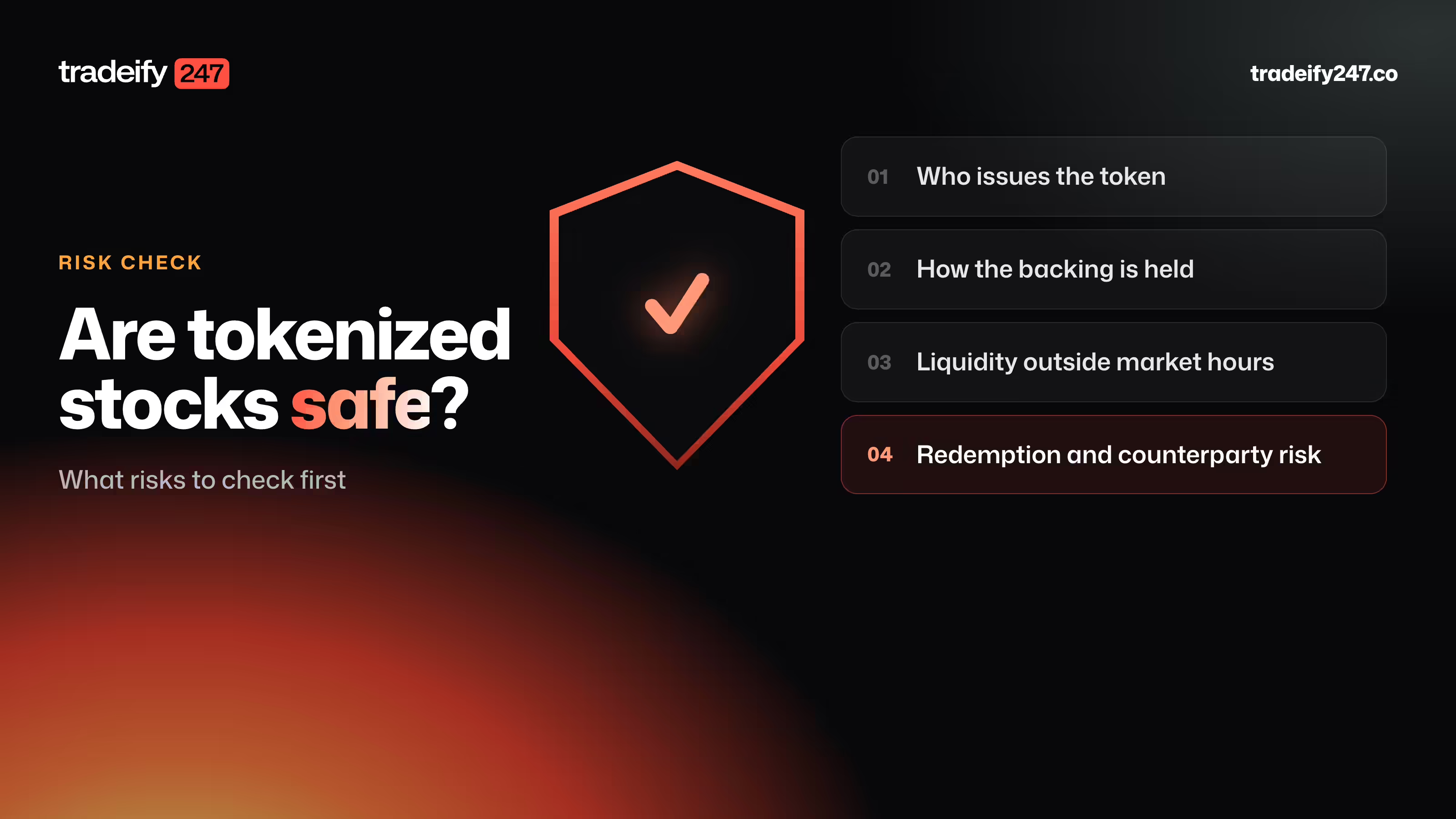
Are Tokenized Stocks Safe and What Risks to Check First
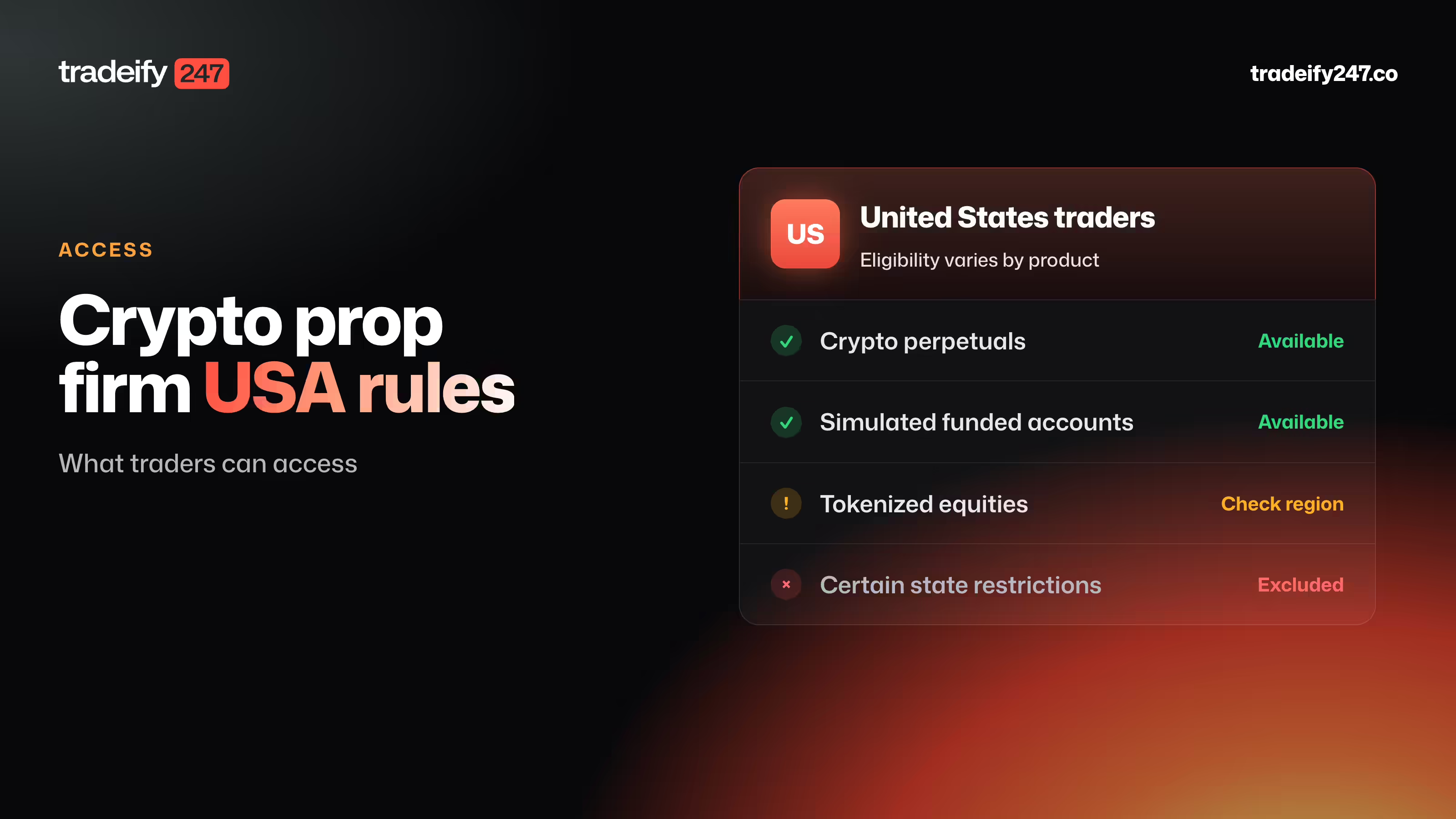
Crypto Prop Firm USA Rules and What Traders Can Access