


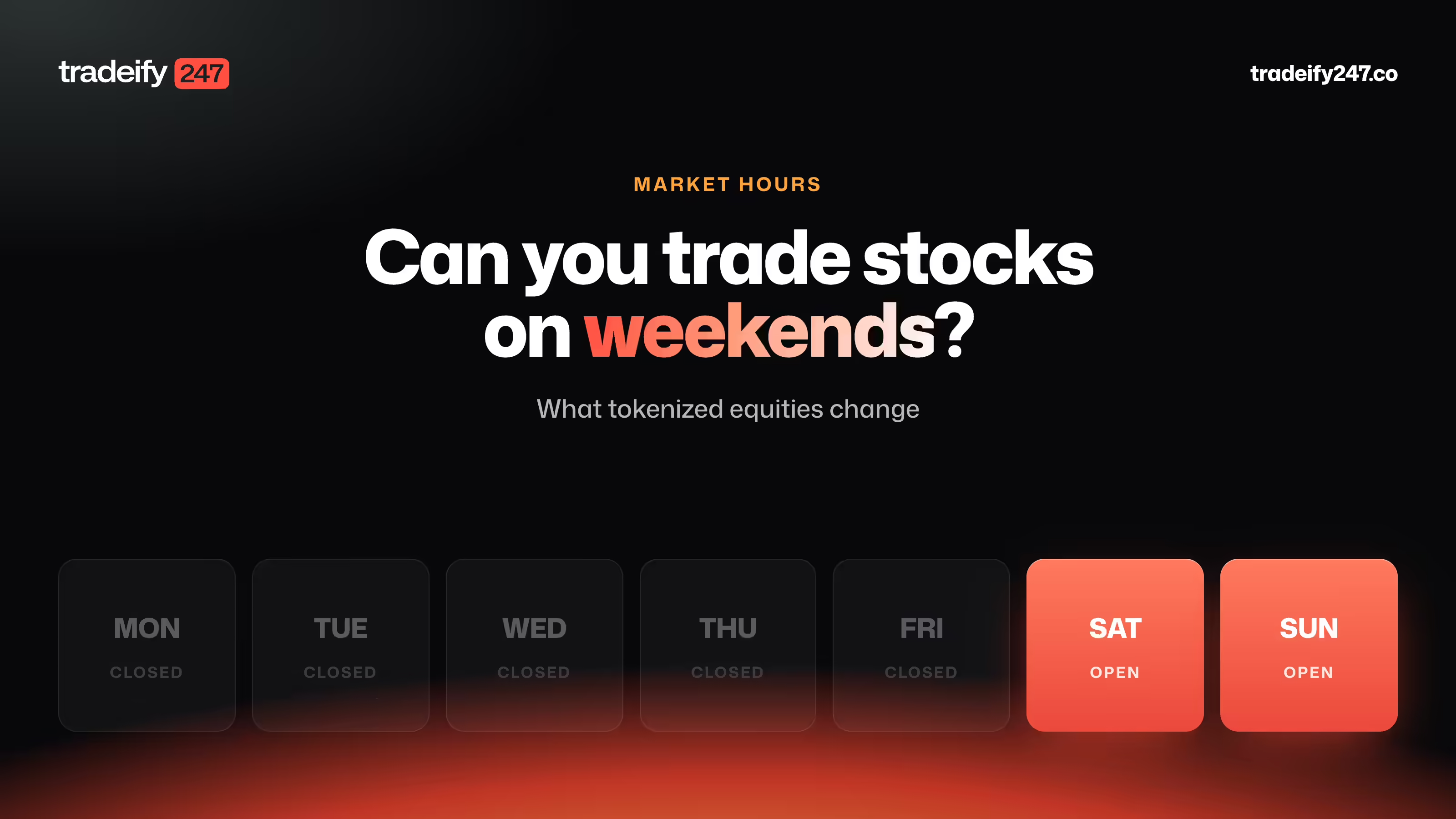
Can You Trade Stocks on Weekends? What Tokenized Equities Change


.svg)

TL;DR: You generally cannot trade ordinary U.S. shares on major exchanges Saturday or Sunday. Some brokers offer overnight weekday sessions, but those often run from Sunday evening through Friday and still pause for the weekend. Tokenized equities can trade 24/7 on venues with a continuous schedule, allowing eligible Apple-, Tesla-, or NVIDIA-linked positions to open, adjust, or close while Nasdaq is shut. Synthetic tokenized equities provide price exposure, not shares or shareholder rights, and weekend liquidity, spreads, basis differences, and stop slippage can be materially worse than during the cash session.
You have a stock thesis on Saturday and the price on your screen is moving. Can you trade it, or are you looking at an order that will sit there until Monday?
For ordinary exchange-listed shares, the short answer is no. The New York Stock Exchange and Nasdaq do not run regular Saturday or Sunday sessions. A brokerage app may accept the instruction, but that is not the same as executing the trade.
Tokenized equities change the schedule, not the underlying reality. A stock-linked contract can remain open while the cash equity market is closed. You gain more control over timing, but you also trade without the full cash-market order flow that normally anchors the price.
Why Stocks Do Not Trade on Weekends
The core U.S. stock session runs Monday through Friday. Fidelity’s current stock-market hours guide lists regular hours as 9:30 a.m. to 4:00 p.m. Eastern and notes that markets close on weekends and most federal holidays.
Brokerages can offer premarket, after-hours, and overnight sessions through electronic venues. Those sessions expand access, but they do not turn ordinary shares into a continuous seven-day market. For example, Robinhood’s weekend investing explanation says its 24 Hour Market operates from 8:00 p.m. ET on Sunday to 8:00 p.m. ET on Friday for eligible symbols, subject to restrictions.
When a trader submits an ordinary stock order on Saturday, one of three things usually happens:
- The broker queues the order for a later session.
- The broker rejects it because the selected order type or symbol is unavailable.
- The app displays an indicative price, but no executable market is open.
The practical consequence is a gap. News and order imbalances can build for two days, so the next executable share price may be far from the number you saw on Saturday.
What Tokenized Equities Change
A tokenized equity is a digital instrument linked to a share or equity index. It may represent an actual security, an indirect custodial interest, or a synthetic price-tracking contract. The structure determines whether the holder owns anything beyond exposure.
The SEC’s tokenized securities overview distinguishes issuer-sponsored, custodial, and synthetic models. This matters because the words “Apple token” do not automatically mean “Apple share.”
Synthetic tokenized equities can trade on a 24/7 venue because the contract is not waiting for Nasdaq or the NYSE to open. The venue can continue matching buyers and sellers and updating a reference or mark price throughout the weekend.
That changes four things for traders:
- A position can be opened, adjusted, or closed on Saturday or Sunday when the specific market is live.
- Company or macro news can affect a stock-linked price before the cash market reopens.
- Positions do not need to be closed simply because the weekday session ended.
- Weekend price formation can be thinner and less closely anchored to the underlying share.
Weekend Stocks and Tokenized Equities Compared
Question | Ordinary U.S. share | 24/7 synthetic tokenized equity |
|---|---|---|
Can it execute Saturday or Sunday? | Generally no on major exchanges | Yes when the tokenized market is open |
Can a weekend order be entered? | Often yes, but it waits for an eligible session | Yes, with potential immediate execution |
Do you own company equity? | Usually beneficial ownership through a broker | No for a synthetic price reference |
Do you receive shareholder rights? | Depends on share class and broker terms | No voting or shareholder dividend rights |
What sets the price on weekends? | No live primary-exchange transaction price | Contract rules, reference data, liquidity, and order flow |
Main weekend risk | Monday opening gap | Thin liquidity, wider spreads, slippage, and basis differences |
The table explains why “stocks on weekends” can be a misleading phrase. The reference company is the same, but the product and market structure are different.
How Weekend Tokenized Equity Prices Form
During regular hours, an NVIDIA-linked instrument can use active NVDA trading as a strong reference. During the weekend, the underlying cash market is closed. The linked instrument may react to semiconductor news, geopolitical events, index-futures expectations, or its own order flow.
That weekend price is useful because it expresses tradable supply and demand in the open venue. It is not an official Nasdaq print. When the cash market returns, the tokenized price and the stock price can move toward each other quickly.
Three gaps deserve attention:
- Bid-ask gap: the difference between the best available buying and selling prices.
- Basis gap: the difference between the linked instrument and its reference share.
- Reopening gap: the jump between Friday’s cash close and Monday’s first regular-session trades.
You can read the news correctly and still have the wrong trade. If the weekend spread is wide or the order book is thin, a good thesis can produce a poor entry and an even worse exit.
A Funded Weekend Trading Example
Tradeify 247 is one prop-firm example of the model. It offers simulated 24/7 access to tokenized stocks alongside crypto, commodities, and indices, with tokenized stock prices sourced from Hyperliquid. Execution takes place on DXTrade or MT5, depending on region.
Positions can remain open overnight and through weekends, and traders can enter or exit eligible markets whenever those symbols are live. The 3% daily loss limit resets at 22:00 UTC every day, weekends included, and breach checks use live equity including open positions. To carry a position across that reset, the original position size must remain fully intact; partially closing before 22:00 UTC and carrying the remainder is not allowed.
Tradeify 247’s Terms of Use add two important qualifications. The trading is simulated unless applicable terms state otherwise, and its tokenized equity instruments are synthetic references, not shares. Traders have no ownership, voting, dividend, or other shareholder rights.
How to Plan a Weekend Tokenized Equity Trade
Weekend access is useful only when it is tied to a written decision. Otherwise, a moving price can create urgency where no valid setup exists. Use the following sequence.
Check the Tokenized Equity Symbol
Confirm that the exact instrument is open. Review its bid, ask, contract size, minimum trade size, and leverage. Tradeify 247 tokenized stocks use 2:1 leverage. They carry no swap, overnight, funding, or holding fee; the only cost is a 0.04% commission on notional at entry and exit, so holding through a weekend adds no extra charge. A homepage promise of 24/7 access does not replace symbol-level checks.
Identify the Weekend Stock Catalyst
State why the position should move before the cash market returns. A valid catalyst might include an earnings release, product announcement, regulatory decision, merger report, major customer update, or macro shock.
Do not enter only because the market is open. Missing Friday’s move does not make Saturday’s price a valid entry. It makes it a different trade that needs its own risk and invalidation.
Define the Tokenized Equity Invalidation
Choose the price or condition that disproves the idea. The stop should reflect the market structure, not an arbitrary dollar amount. Then reduce position size until the loss at that stop fits the account budget.
Reserve Room for Weekend Slippage
A stop is not a guaranteed fill. If the expected loss at the requested stop would use the entire available daily-loss buffer, the trade is already too large. Leave room for spread expansion, a worse fill, and correlated moves in other positions.
Plan for the Stock Market Reopen
Decide what to do before Monday’s cash session. The trader may close, reduce, keep the position, or move the stop only if the plan defines those choices in advance. The opening auction can bring a sudden increase in price discovery and volatility.
When Weekend Trading Helps
Weekend execution can help event-driven traders who need to respond before Monday. It can also help swing traders reduce exposure when a thesis changes, rather than waiting through a closed market.
The value is control. In a fully closed market, a stop cannot execute. In an open tokenized market, you may be able to reduce or exit.
That control is conditional. If liquidity disappears, the available fill may still be poor.
Weekend access is less useful when the strategy depends on cash-session volume, opening-auction data, or institutional stock-market participation. A market can be open but still lack the conditions the strategy was designed to trade.
Weekend Tokenized Equity Risks
The first risk is lower liquidity. Fewer participants can mean larger spreads and greater slippage.
The second is reference uncertainty. The primary share is not actively trading, so the linked price may move away from Friday’s close before cash-market confirmation.
The third is continuous account exposure. A position can move while the trader sleeps. Alerts, stops, and smaller sizing are essential, but none guarantees a specific exit price.
The fourth is confusion about ownership. Tokenized price exposure is not a substitute for shares if the objective is dividends, voting, or long-term custody.
The fifth is rule risk. Prop firms can define daily reset times, loss calculations, restricted practices, and payout conditions independently of market hours. Read the current trading rules before relying on a weekend strategy.
How Weekend Trading Differs From Weekend Holding
Some prop firms let a Friday position survive until Monday even though the underlying market cannot execute new trades. That is weekend holding, not weekend trading. Confusing the two is how traders end up with risk they cannot change.
FTMO’s official overnight and weekend FAQ says its Swing account has no restriction on holding through weekends, while account type and market availability still matter. FundedNext’s current holding guidance also allows overnight and weekend holding across listed account types.
Tradeify 247 is a useful contrast because eligible tokenized markets are designed to remain tradable 24/7. A trader comparing any venues should ask two separate questions: “Can I keep the position?” and “Can I actually execute an order on Saturday?”
Weekend Stock Trading Questions
What Happens If I Buy a Stock on Saturday?
For an ordinary brokerage share, the order will usually wait for an eligible session or be rejected. The displayed weekend price is not a guaranteed execution price.
Is Weekend Stock Trading a Good Idea?
It can suit a tested event or swing strategy, but liquidity is often thinner and spreads can be wider. Access alone does not create a trade setup.
Can I Trade Apple or Tesla on Sunday?
Not as ordinary Nasdaq shares during the exchange’s weekend closure. An eligible synthetic tokenized instrument can trade on Sunday through a venue that supports 24/7 execution.
Are Tokenized Equities Real Stocks?
Some tokenized securities can represent ownership, but synthetic tokenized equities do not. A synthetic stock-linked instrument provides price exposure without share ownership or shareholder rights.
Before your first weekend order, confirm that the symbol is live, record the spread, and decide what invalidates the trade. If you cannot verify all three, wait for a better spot.

Keep Reading
See all
Are Tokenized Stocks Safe and What Risks to Check First
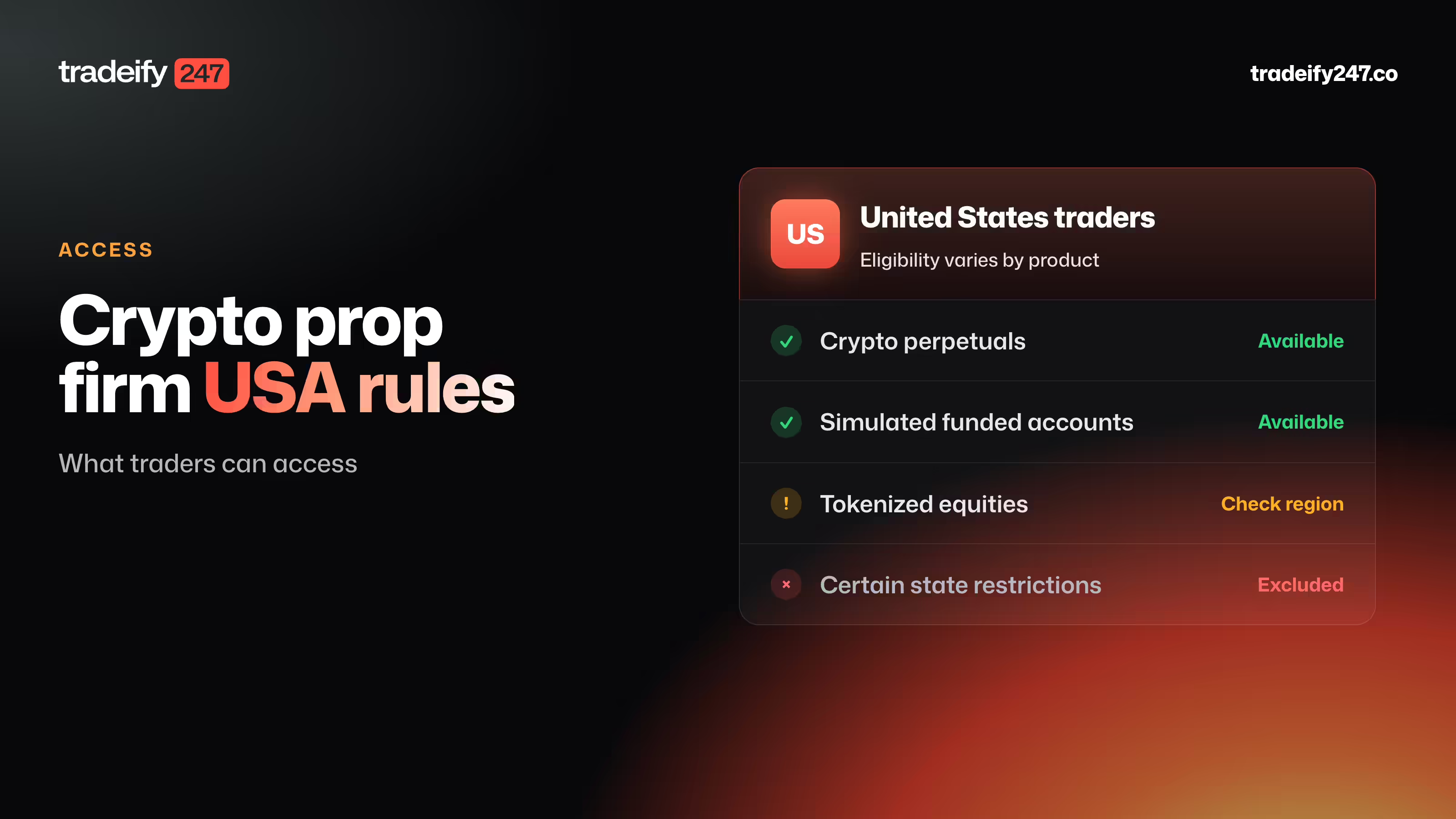
Crypto Prop Firm USA Rules and What Traders Can Access